
Disinfection systems play an important role for providing safe water. They also help preventing the spread of harmful microorganisms. These systems use methods such as UV light, chemical disinfectants, and ozone treatment. Using these methods, the bacterias, viruses, and fungis can be eliminated from water.
Types of Disinfection Systems
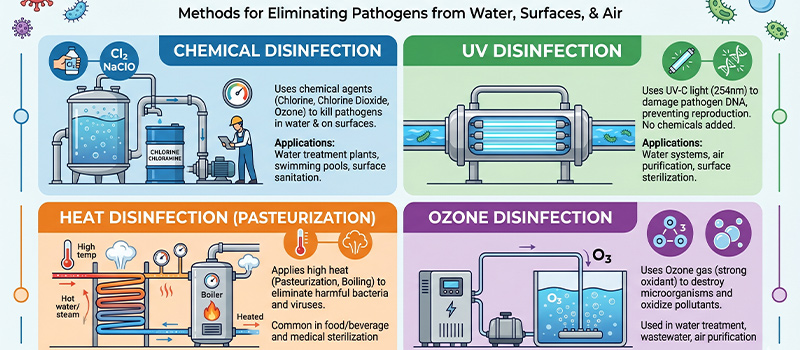
Disinfection systems are designed to destroy bacteria, viruses. The most widely used methods are chemical, physical, and oxidation. Each type has unique advantages depending on the application. Water quality, and regulatory compliance are also important . Now let’s take a closer look on these methods.
Water Chlorination

Chlorine is known for its effectiveness against harmful micro organisms. It does not produce harmful residue. Chlorine dioxide generation systems produce the chemical on site. This provides stability and safety. These systems are widely used in drinking water treatment because of their efficiency and minimal environmental damage.
UV Water Treatment Systems
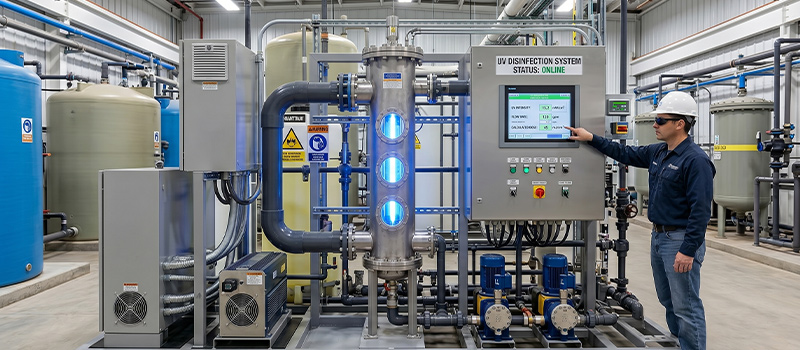
Ultraviolet disinfection systems use UV light to eliminate microorganisms. This is done via damaging their DNA, so they can’t replicate. This method does not require chemicals. Also it is highly effective. It does not change the taste or odor of water. UV disinfection systems are generally used in water treatment plants, wastewater facilities, and residential applications. They are particularly preferred for their low maintenance and rapid disinfection capabilities.
Ozone Disinfection Solutions

Ozone is one of the most powerful oxidizing agents available for water treatment. Ozone treatment systems work by injecting ozone gas into water. Ozone reacts and kills bacterias effectively. These systems are highly effective against bacteria and viruses. Ozone also removes odors of water. Therefore it is being used in bottled water industry.
Also here is a comparision table for quick review of these systems:
| Feature | Chlorine Disinfection | UV Disinfection | Ozone Disinfection |
|---|---|---|---|
| Method | Chemical | Light | Oxidizing gas |
| Effectiveness | High | High | Very High |
| Residue | Yes | No | No |
| Chemical Usage | Yes | No | No |
| Taste/Odor | Can negatively affect | No impact | May improve |
| Maintenance | Moderate | Low | High |
| Operating Cost | Low | Medium | High |
| Safety | Chemical Risk | UV Exposure Risk | Toxic Gas Exposure |
| Environment | Can leave residue | ne residue | no residue |
Disinfection Process Analyzers
Disinfection process analyzers are essential tools for monitoring and controlling the whole system. These devices measure parameters such as disinfectant concentration, oxidation reduction potential, and other vital informations. Real time monitoring ensures that systems operate as it should. Integrating analyzers with automated control systems enhances reliability and reduces risks.
Importance of Monitoring
Effective monitoring is important for maintaining the performance. It is also important for safety of disinfection systems. Without monitoring, systems may underperform or produce harmful byproducts. It may even cause for over use of chemicals. Continuous monitoring allows operators to detect anomalies, optimize chemical usage. Thus the water quality could be hold at specific value. It also helps in meeting environmental and public health regulations.
Future of Disinfection Technologies
The future of disinfection technologies is driven by innovation and digitalization. Recently, smart monitoring systems, energy-efficient UV led technologies, and hybrid systems that introduced to industry. That kind of innovative technologies also increase effectiveness. Also, there is a trend on reducing chemical usage for protecting environment.
Nowadays water quality challenges are becoming more complex. Thus the consumer demand for more advanced and reliable systems. Investing in modern technologies and robust monitoring solutions is a must to ensuring safe and sustainable water treatment for environment.
Conclusion
Disinfection systems are important systems for public health. From traditional chemical methods to advanced UV and ozone technologies, each system has unique benefits. With advancements in monitoring and automation, the industry is moving toward smarter and more eco friendly solutions. Understanding these systems and their applications is essential for making correct decisions.