
Water softening is a mineral removal process from hard water to make it soft water. Hard water is a disturbing issue in many homes and industrial application leading to scale buildup. This scale will diminish the efficiency. The built up scale will affect efficiency and therefore cost energy. A well prepared water softening system can solve these problems. Thus improves water quality and extend the lifespan of accessories.
Understanding Water Softening Systems

Water softening systems are designed to remove minerals like calcium and magnesium . These minerals determine water hardness. These minerals can accumulate in pipes, water heaters, as well as other parts, reducing efficiency and increasing maintenance costs. By removing these minerals you can ensure appliance protection. Too many problems arises due to hard water impact. Hard water problems should be adressed promplty in order to protect the system.
A water softener treats incoming water before it reaches your taps. The result is softer water that is gentle on your skin and clothes.
How Water Softeners Work
The working principle of ater softeners is process called ion exchange. In this process, hard minerals are replaced with sodium or potassium ions. With that way, water become softer.
The ion exchange takes place in a resin bed inside the softener tank, where . Over time, the resin becomes obsolote and must be regenerated to get soft water.
Salt-Based Water Softeners
Salt-based softeners are the most common type of water softener. They use sodium atoms to remove hardness through ion exchange.
These systems constantly needs salt and periodic regeneration cycles. They are ideal for homes with very hard water and high water usage.
Salt-Free Water Softeners
Salt-free softeners do not remove minerals. It just changes their structure. With this method the minerals can’t buildup to form scale. They called as descalers.
They often require less maintenance. But they may not be as effective in extremely hard water.
Types of Water Softeners Available

There are several types of water softening systems available. Each suits for different needs.
- Salt-based systems
- Salt-free systems
- Dual-tank systems
- Magnetic or electronic descalers
Understanding the differences helps you make an informed decision.
| Type | How it Works | Pros | Cons |
|---|---|---|---|
| Salt based | Ion Exchange | Effective | Requires salt |
| Salt free | Condition Water to prevent scale | No Salt needed | Does not actually soften |
| Dual tank | Two tank continously works | Continously provide water | Expensive |
| Magnetic or electronic descalers | Altering mineral shape via Magnetic filter | Easy install | May not work in all cases |
Dual-Tank Water Softeners
Dual-tank systems has two resin tanks inside. That way one tank regenerate while the other continues to soften water. This provides a continuous soft water. They are being preferred with high water consumption.
Benefits of Using a Water Softener

Installing a water softener has some advantages:
- Reduces scale buildup
- Improves soap and detergent efficiency
- Extends appliance lifespan
- Leaves skin and hair feeling softer
- Prevents stains on dishes
After some time cost savings due to water softener will become higher than the investment cost.
Choosing the Right Water Softener for Your Home
There are several factors to considerate when choosing the right system.
- Water hardness level in your area
- Household size and water usage
- Budget and maintenance preferences
- Available installation space
We recommend testing water before determining the system type.
Installation Tips for Water Softening Systems
For the best performance proper installation is a must. A professional installation is always recommended for best results. The most important thing is placing the system near the main water supply.
Installation Process for Water Softeners
Water softener installation generally includes:
- Shutting off the main water supply
- Cutting into the water line
- Installing bypass valves
- Connecting the softener unit
- Testing for leaks
Also please strictly follow manufacturer guidelines.
Maintenance and Care for Water Softeners
Maintenance tips should not be overlooked .Routine maintenance ensures system longevity. This includes checking salt levels and cleaning components.
How to Add Salt to Your Water Softener
Adding salt is a simple but essential
- Check the brine tank regularly
- Use high quality salts
- Never overfill the tank
- Break salt pieces if they form
Proper salt level is a must for regeneration .
Regeneration Cycles Explained
Regeneration is flushing the resin with a salt solution. This restores its ability to exchange ions. Therefore continue to soften the water. Systems can regenerate both on a timer or based or on water usage.
Cleaning Your Water Softener
Periodic cleaning helps prevent scale and smells:
- Clean the brine tank regularly
- Use recommended cleaners
- Inspect valves
- Sanitize the system regularly
Regular care definitely extends the life of the system.
Common Issues with Water Softeners
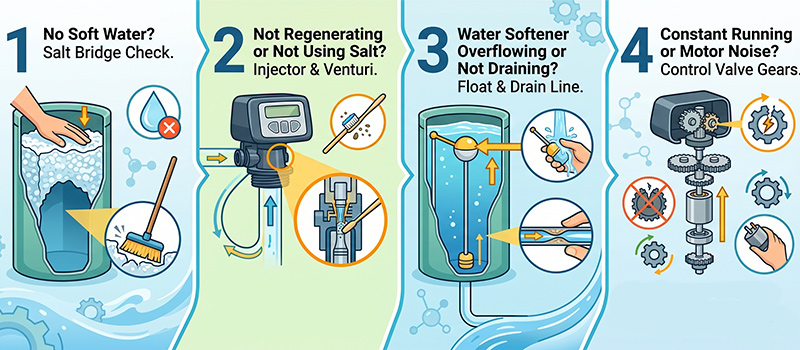
Water softeners itself are not free of problems. They can be problematic sometimes like
- Salt bridging
- Resin fouling
- Low water pressure
- System not regenerating
Addressing issues early may prevent costly repairs.
Troubleshooting Water Softener Problems
We have a basic troubleshooting softeners guide for you:
- Checking salt levels
- Inspecting for blockages
- Verifying timer and settings
- Ensuring proper water flow
If problems persist, please ask for professional help.
Frequently Asked Questions About Water Softeners
Here are the frequently asked questions about water softeners:
Do Water Softeners Remove All Minerals?
Salt-based softeners remove hardness minerals but will leave trace elements.
Is Softened Water Safe to Drink?
Yes, though some people prefer filtered water for taste.
How Often Should I Add Salt?
Typically every 4 weeks or so, depending on usage.
Do I need a Professional for Installation?
Professional installation ensures the best performance.